
If you’ve ever wondered why your home feels drafty in one room and stuffy in another—or why your energy bills keep creeping up—there’s a good chance your house is leaking air. A blower door test is the simplest, most reliable way to find out where that air is escaping.
In this guide, we’ll break down what a blower door test is, how it works, what homeowners can expect during an appointment, and why it matters for comfort, energy efficiency, and code compliance.
What Is a Blower Door Test?
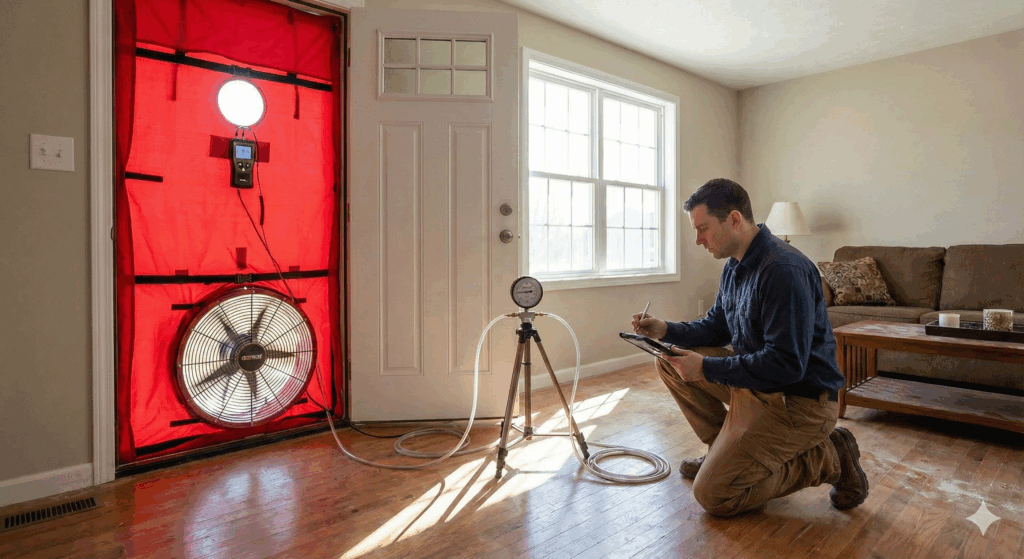
A blower door test is a diagnostic test that measures how airtight your home is. Think of your home like a big balloon—any tiny holes, cracks, or gaps let conditioned air escape and outside air sneak in. A blower door test quantifies those leaks by using a large, calibrated fan to slightly depressurize your house.
Once the pressure drops, air naturally rushes in through any cracks or openings. With that airflow measured, your technician can determine:
- How much air your home is losing
- Where the leaks are located
- How severe those leaks are
For homeowners, that means real insights into comfort issues, insulation performance, and opportunities to save on utility costs.
How Does a Blower Door Test Work? (Step-by-Step)
Here’s what actually happens during the test:
1. Setup
Your technician installs a temporary frame (usually red or blue) into an exterior doorway, then mounts a high-powered fan into it. The setup looks like a fabric door with a circular fan in the center.
2. Depressurizing the Home
The fan pulls air out of your home, lowering the indoor pressure. This forces outside air to enter through every tiny gap.
3. Measuring Air Leakage
A digital gauge measures airflow and pressure changes. From this, the technician calculates your:
- Air Changes per Hour (ACH)
How fast your home exchanges inside air with outside air. - CFM50
Cubic feet of air per minute at 50 pascals of pressure—industry standard for testing.
4. Finding the Leaks
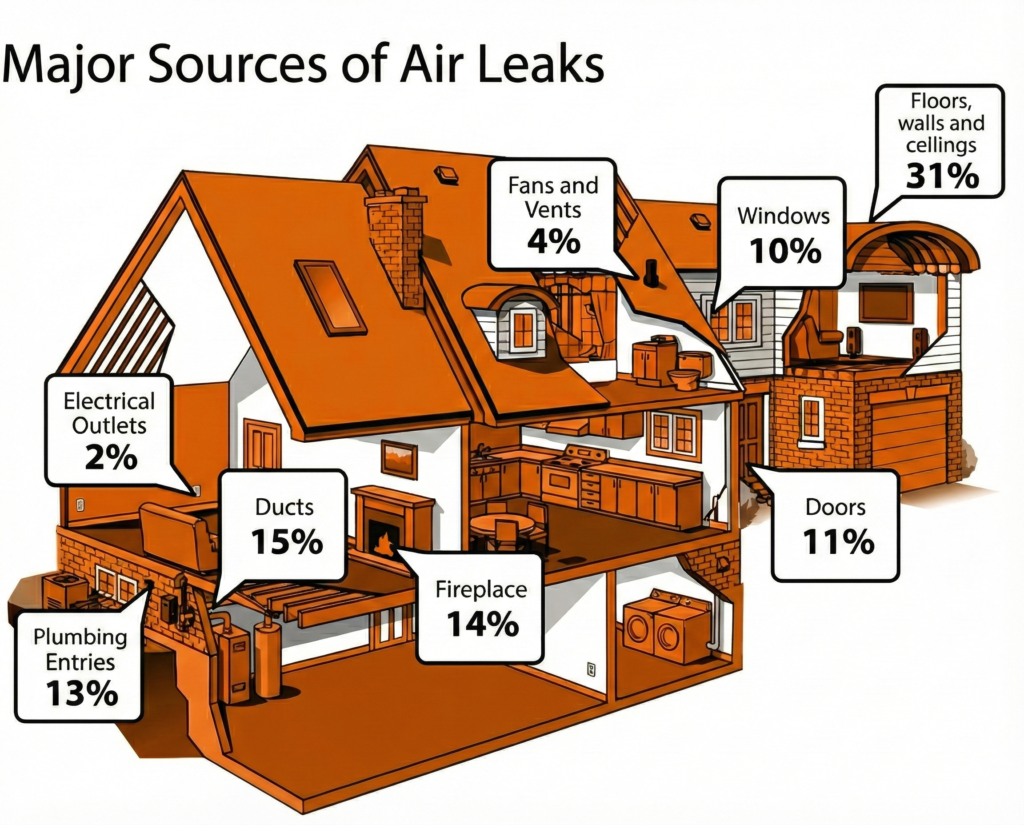
Now the detective work begins. Your technician will look for air coming in through:
- Gaps around windows and doors
- Attic access points
- Plumbing and electrical penetrations
- Basement rim joists
- Recessed lighting
- Chimney or vent chases
- Poorly sealed ductwork
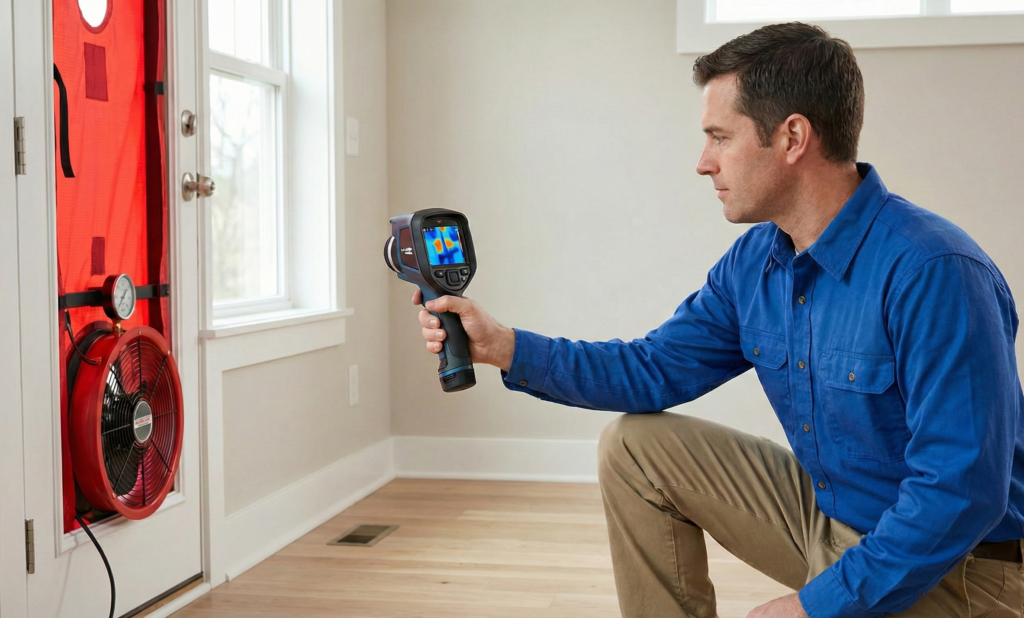
Tools like infrared cameras or smoke pencils might be used to make leaks visible.
5. Results & Recommendations
At the end, you’ll get a clear explanation of where your home is losing air and what fixes will make the biggest impact.
Why Do Homeowners Need a Blower Door Test?
1. Improve Comfort
Air leaks cause noticeable hot and cold spots. A blower door test identifies the exact causes so you can fix them instead of guessing.
2. Save Money on Energy Bills
Sealing leaks can significantly reduce heating and cooling costs—especially in older homes or homes with unfinished attics and basements.
3. Validate Insulation Performance
Insulation works best when air isn’t constantly flowing through it. A blower door test shows whether your current insulation is actually doing its job.
4. Check for Moisture or Indoor Air Quality Issues
Air leaks can create moisture problems in walls and attics, leading to mold or mildew. Sealing those leaks helps maintain healthier indoor air.
5. Meet Building or Renovation Codes
Many energy codes require blower door testing as part of new construction or major renovations. Even if your project doesn’t require it, the test offers valuable insight during upgrades.
What Should You Expect During a Blower Door Appointment?
On test day:
- The process typically takes 1–2 hours
- You’ll need to close all exterior doors and windows
- Interior doors stay open
- Your HVAC system will be turned off temporarily
- Pets should be secured (the noise can surprise them)
The test itself is safe for your home—no risk to your furnace, plumbing, appliances, or structure. You may hear some whistling as air enters through leaks, but that’s normal.
What Happens After the Test?
Once the technician pinpoints your home’s trouble areas, you’ll get a prioritized list of improvements. These often include:
- Sealing leaks with caulk or foam
- Weatherstripping doors and windows
- Improving attic or basement insulation
- Sealing or repairing ductwork
- Adding door sweeps or gaskets
Most fixes are simple and affordable—and they often pay for themselves quickly in energy savings.
Learn More About Our Blower Door Services
If you want a deeper breakdown of how blower door testing works—or you’re ready to schedule—visit our service page:
Blower Door Testing & Air Leakage Testing
Ready to Find Out How Airtight Your Home Really Is?
Get accurate results, expert guidance, and clear next steps.
If you’re in New Hampshire, Southern Maine, Eastern Vermont, or Northeast Massachusetts, our team can help you reduce drafts, lower bills, and improve home comfort.
Schedule your blower door test today.
Fill out our quick form or give us a call—we’ll take it from there.